
A Closer Look at Systems Built for Spaces That Keep Changing
The directory in your lobby was accurate the day it went up. Then a department moved to the third floor, a suite was renumbered, and a construction barrier closed the corridor everyone used to reach the elevators. The sign still points the old way.
Your front desk has quietly become the correction. Staff repeat the same directions dozens of times a day while a replacement panel sits in a production and installation queue measured in weeks. Across a portfolio of dozens or hundreds of locations, that lag compounds everywhere at once. Digital wayfinding solutions break that cycle, and the reason comes down to what a display can do after it is installed.
Planning digital wayfinding solutions across a multi-site footprint? Talk with our team about your locations.
Printed Signage Locks In a Floor Plan That Keeps Moving
Static signage is a snapshot. It captures a building as it existed at the moment of fabrication, and it holds that snapshot until someone pays to replace it.
For a space that rarely changes, that works well, and traditional wayfinding signage remains the right answer for a great deal of what buildings need. The trouble starts in environments that reconfigure regularly. Hospitals shift departments. Corporate campuses reassign floors as headcount moves. Retail centers cycle tenants. Transportation hubs open and close lanes and gates by the hour.
In each case, the correction cycle is the same: identify the error, approve the change, fabricate a new panel, schedule a crew, install. Weeks pass while visitors navigate from information that is already wrong.
The Real Difference Shows Up After Installation
A digital display can present different information tomorrow than it presents today, without anyone fabricating anything.
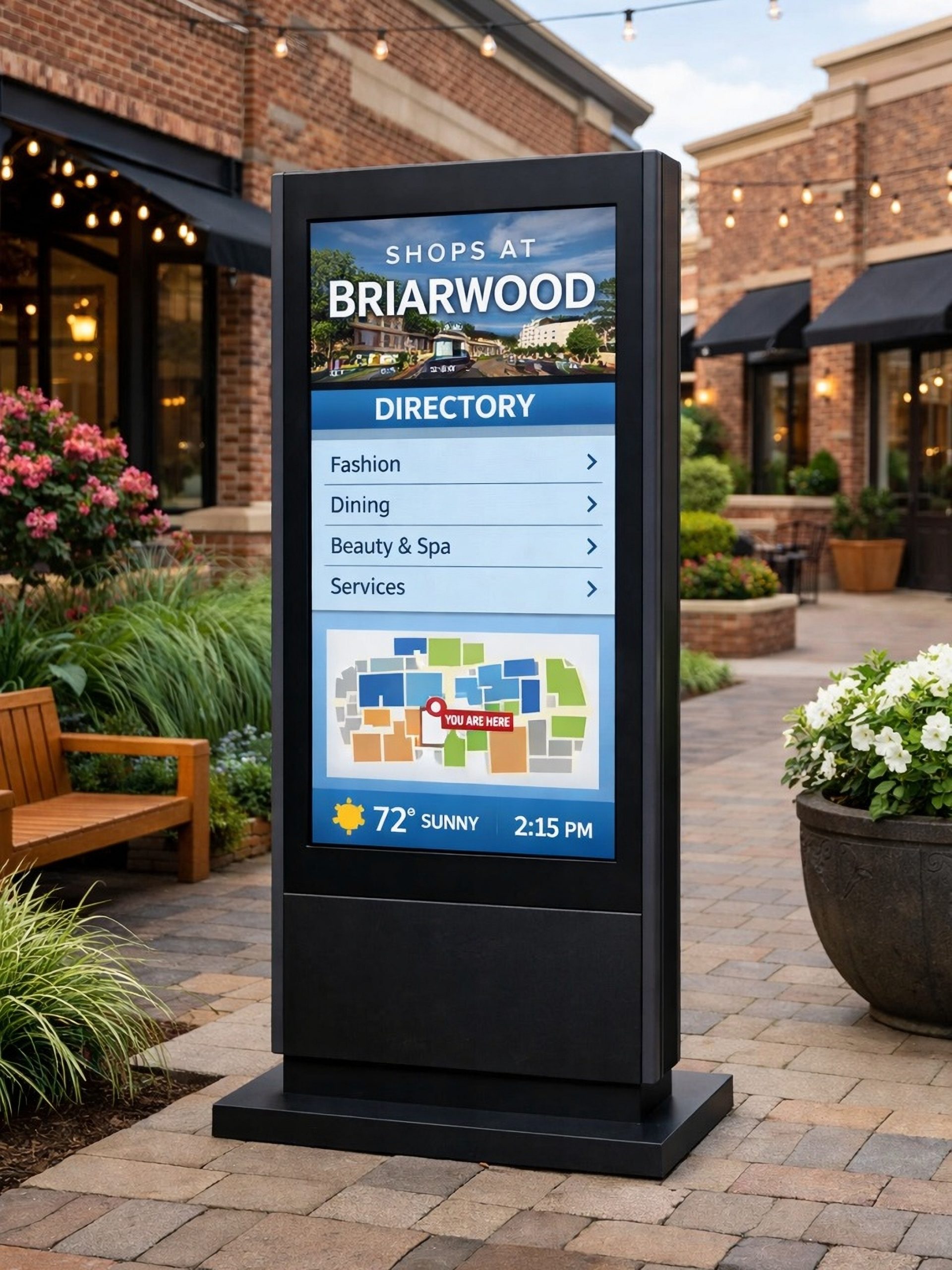
That single property is what separates digital wayfinding solutions from every printed alternative. An interactive map reflects the building as it currently stands. Digital lane open and close signage responds to conditions as they shift. An exterior digital directory shows the tenant who moved in last month. Interactive displays let a visitor search for a destination by name rather than scanning a fixed list.
Accessibility improves alongside accuracy. ADA-compliant navigation displays can adjust text size, offer audio guidance, and present route options at heights and angles a printed panel cannot accommodate at once.
The priority this addresses is well documented. In ACRP Report 161, a Transportation Research Board study, 1,000 passengers surveyed at the top eight U.S. gateway airports ranked finding their way among their highest priorities.
What Digital Wayfinding Solutions Require
This is where the conversation usually turns practical, because a digital display is a building system rather than a mounted panel.
Every unit needs power provisioning and a data path, which often means electrical installation and voice and data cabling coordinated ahead of the display itself. Larger exterior directories require structural steel and mounting engineered for the location and its wind and weather loads. In-house manufacturing keeps enclosure fabrication aligned with the structural design rather than split across vendors.
Local code adds another layer. Digital displays draw scrutiny that static signs often avoid, particularly on brightness, placement, and exterior visibility. At Stratus, our permitting specialists work these requirements jurisdiction by jurisdiction, which matters most when a rollout crosses dozens of municipalities with different rules.
Then there is the finish-out. Professional installation has to leave the surrounding wall, floor, or facade looking intentional, not patched.
Planning for Uptime Before the First Display Goes Live
A dark screen guides no one, so service planning belongs in the initial scope rather than the first outage.
Remote diagnostics and system health monitoring flag failures before a visitor encounters one. When a unit does need hands on it, our nationwide field partner network and on-call services put a qualified technician on site without you sourcing a local vendor under pressure.
Navigation That Keeps Pace With Your Space
Stratus has spent decades helping national brands implement and maintain their presence across large footprints, and digital signage deployments draw on every part of that. Design and engineering, permitting, manufacturing, electrical and data work, installation, and ongoing service run through one program rather than a stack of separate contracts you coordinate yourself.
Ready to plan digital wayfinding solutions across your locations? Start the conversation with our team.