
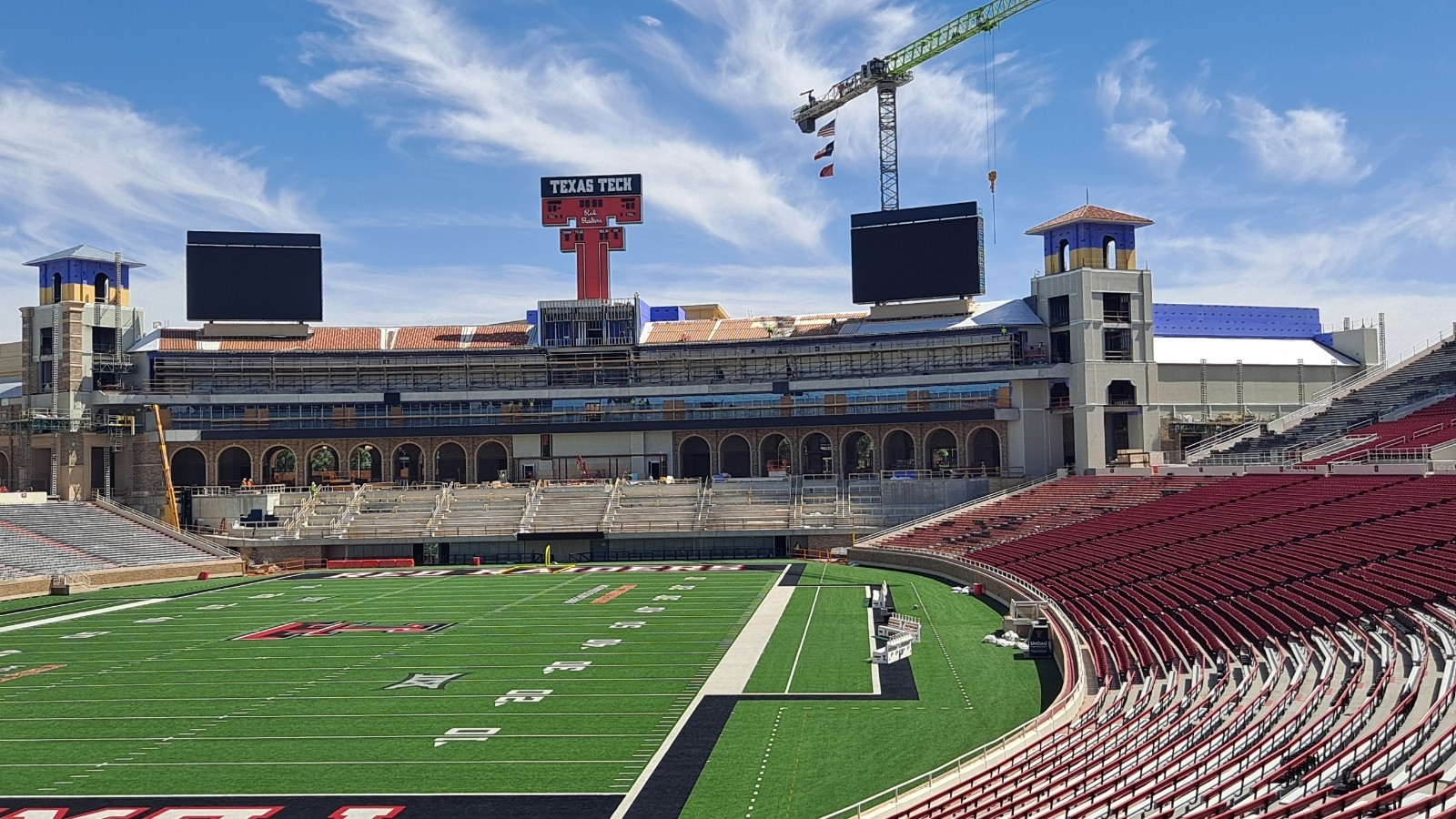
Why the Schedule is Settled Long Before the Last Home Game
Most facility projects have a flexible deadline. Push a retail refresh two weeks, and you lose some momentum. Push a venue project for two weeks, and you are installing around a sold-out crowd.
The off-season window does not negotiate. It opens when the last event ends and closes when the first one begins, and both dates were published months ago. Everything has to fit, which is why teams under pressure start trimming the parts of the stadium digital signage project that feel optional. Those are rarely the parts that were actually optional.
Scoping a venue display project? Talk with our team about your timeline.
Digital Carries More Schedule Risk Than Any Other Venue Signage
A vinyl graphic needs a clean surface and a crew. A large-format display needs considerably more.
Stadium digital signage depends on power provisioning sized for the load, data pathways run to each location, structural mounting engineered for the specific attachment point, and commissioning once the hardware is live. Outdoor digital displays add wind loading, weather sealing, and brightness calibration on top of that.
Each of those is a dependency. Structural steel cannot go up until engineering is approved. Displays cannot mount until steel is set. Commissioning cannot start until power and data are live. A delay anywhere pushes everything downstream, and in a venue there is nowhere downstream to push to.
What Stadium Digital Signage Work to Prioritize Before the Window Opens
This is the part that determines whether the project succeeds, and almost none of it happens inside the venue.
Permitting. Digital displays attract regulatory attention that static signage often avoids, particularly around brightness, animation, and structural attachment. Permitting work should be complete before the window opens rather than running alongside installation. Our sports venue signage compliance checklist covers the specific standards that apply.
Engineering and structural design. Attachment points, load calculations, and access planning all need sign-off well ahead of fabrication. Discovering a structural conflict during install is the most expensive way to find one.
Fabrication. Lead times on custom enclosures and large-format assemblies are long enough to consume an entire window on their own. In-house manufacturing gives a project real control over that timeline instead of leaving it to a vendor queue.
Staging. Materials should be received, inspected, and kitted before the first crew arrives. Warehousing and logistics turn the window into pure execution time rather than time spent waiting on freight.
The research supports front-loading this heavily. A study across a database of more than 16,000 large projects found that only 8.5 percent finished on both budget and schedule. The prescription for the rest is to plan slowly and build fast. Venue work makes that unusually literal.
What the Off-Season Window Itself Is For
Once the window opens, the venue should see installation, integration, and commissioning. Nothing else.
That is when crew density matters most, because parallel work is the only remaining lever. A nationwide field partner network makes it possible to run multiple installation teams at once rather than sequencing one crew through every location. Program management holds the order of operations so trades are not waiting on each other inside a fixed schedule.
Commissioning deserves protected time at the end. A display that powers on is not the same as a display that is calibrated, integrated, and verified across the whole venue.
Where Compressed Schedules Actually Break
When a stadium digital signage schedule tightens, the shortcuts cluster in predictable places: accepting whatever hardware is available rather than what was specified, skipping sightline verification, deferring commissioning to the first event.
Each of those trades a few days now for a problem that surfaces mid-season, when correcting it means working around a full schedule. Our post on costly signage mistakes in arenas walks through what those corrections tend to cost. Value engineering done during planning finds savings that hold up. Decisions made in the last week of a window rarely do.
Building Stadium Digital Signage Ready for Opening Night
Stratus brings permitting, manufacturing, logistics, installation, and program management together under one program, so the sequencing work happens where it belongs, and the window stays reserved for the work that has to happen inside it.
Ready to plan your next venue display project? Start the conversation with our team.