
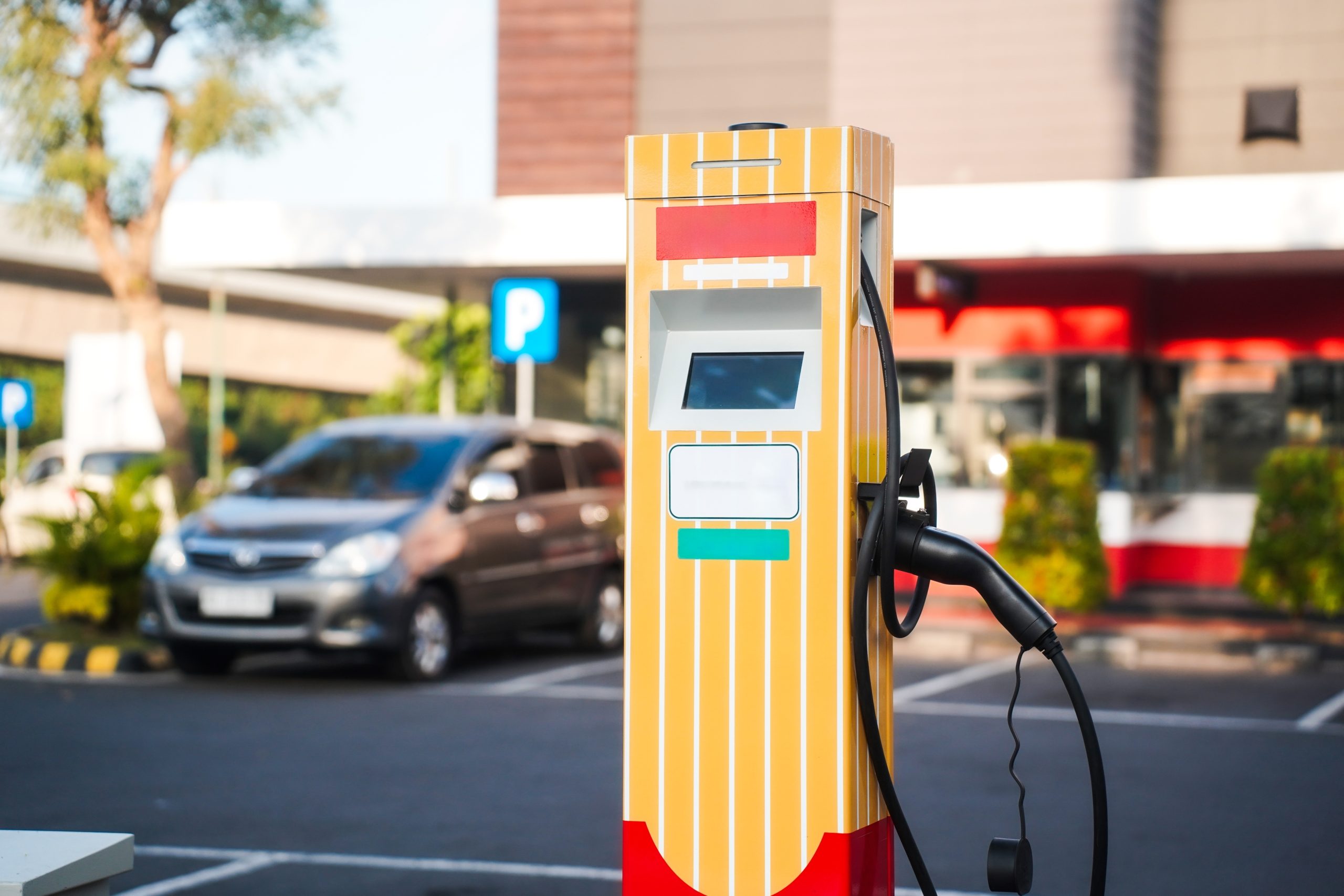
Smart Restaurant Operators Capitalize on Government Incentives
Forward-thinking restaurant owners across the country are discovering a lucrative opportunity hiding in plain sight: EV rebates that can significantly offset electric vehicle charging station installation costs. While many operators view EV charging as an expensive future consideration, savvy business owners are leveraging generous federal, state, and utility incentives to add profitable customer amenities today.
The numbers are compelling. A typical restaurant charging station full installation — a Level 2 Charge unit — typically costs $10,000-$20,000. But with available rebates, the actual investment is often 30-50% percent less. Meanwhile, EV drivers typically spend 20-45 minutes charging their vehicles — which is prime time for additional food and beverage purchases that can quickly justify the investment.
At Stratus, we’ve helped restaurant brands nationwide implement comprehensive EV charging solutions that maximize available incentives while seamlessly integrating with existing operations and branding strategies.
Ready to Capitalize on EV Rebate Opportunities? Connect with our team today to discover how government incentives can make charging stations a profitable addition to your restaurant operations.
The EV Rebate Landscape: Substantial Savings Available Now
Restaurant operators can access multiple layers of financial incentives that dramatically reduce EV charging station costs:
Federal Tax Credits provide 30% of installation costs up to $100,000 for commercial properties, creating immediate substantial savings for multi-location operators or single restaurants with comprehensive charging infrastructure.
State and Local Programs vary significantly by location but often add thousands more in rebates. California’s CALeVIP program, for example, can provide up to $80,000 per site, while New York’s NYSERDA program offers rebates up to $4,000 per charging port.
Utility Company Incentives represent another significant opportunity. Many utilities offer installation rebates, reduced electricity rates for EV charging, or infrastructure upgrade assistance. Some programs cover up to 100% of electrical infrastructure costs.
The combined impact of all these incentives means total savings frequently reach 50-70% of project costs. However, many programs operate on limited funding that can be exhausted quickly, creating urgency for restaurant operators considering this investment.
Strategic Business Benefits Beyond Initial Rebates
However, EV charging stations deliver measurable business advantages that extend far beyond rebate savings.
- Extended Customer Dwell Time — While gasoline refueling takes 3-5 minutes, EV charging requires 20-45 minutes — perfect for restaurants. Customers often order appetizers, desserts, or additional beverages while waiting, significantly increasing average transaction values.
- Premium Customer Demographics — EV drivers typically possess higher disposable incomes and demonstrate a willingness to pay premium prices for convenience and sustainability-aligned businesses. These customers often become loyal patrons when restaurants provide charging amenities.
- Competitive Differentiation — In the U.S., relatively few restaurants currently offer EV charging. Early adopters can capture market share while competitors lag behind this growing trend. Studies show EV drivers actively seek businesses with charging capabilities, creating built-in customer acquisition advantages.
- Future-Proofing Operations — This protects against inevitable market shifts. EV adoption continues accelerating, and businesses offering charging infrastructure will increasingly attract environmentally conscious consumers who prioritize sustainability in their spending decisions.
Implementation Considerations for Restaurant Operations
Successful EV charging implementation requires strategic planning that considers restaurant-specific operational requirements. This includes many different facets.
Site assessment and planning are needed to balance charging accessibility with existing parking needs, customer flow patterns, and electrical capacity limitations. Professional site evaluation identifies optimal charging station placement that maximizes convenience without disrupting normal restaurant operations.
Deploying permitting and regulatory navigation expertise can significantly impact project timelines and costs. Experienced partners understand local requirements, utility interconnection procedures, and ADA compliance considerations that affect charging station installations.
Integrated branding and signage ensures charging stations enhance rather than detract from restaurant aesthetics. Custom signage solutions can incorporate restaurant branding while providing clear wayfinding for EV drivers, creating cohesive customer experiences.
Integrating the new charging stations for restaurants includes staff training on charging systems, pricing strategy development, and maintenance protocol establishment. Comprehensive implementation partners coordinate all aspects of installation while minimizing disruption to daily restaurant operations.
Maximize Your EV Investment with Expert Implementation Partners
Taking advantage of EV rebates for restaurant charging stations requires more than just installing equipment — it demands strategic implementation that optimizes available incentives while enhancing customer experiences. The complexity of coordinating rebate applications, permitting requirements, site preparation, and operational integration makes expert partnership essential for maximizing return on investment.
At Stratus, our comprehensive approach combines EV charging expertise with a deep understanding of restaurant operations. We handle everything from rebate application assistance and strategic permitting to custom signage solutions and ongoing maintenance support, ensuring your EV charging investment delivers maximum business value.
Contact our team today to explore how to make every dollar go further with investment in EV charging stations.