
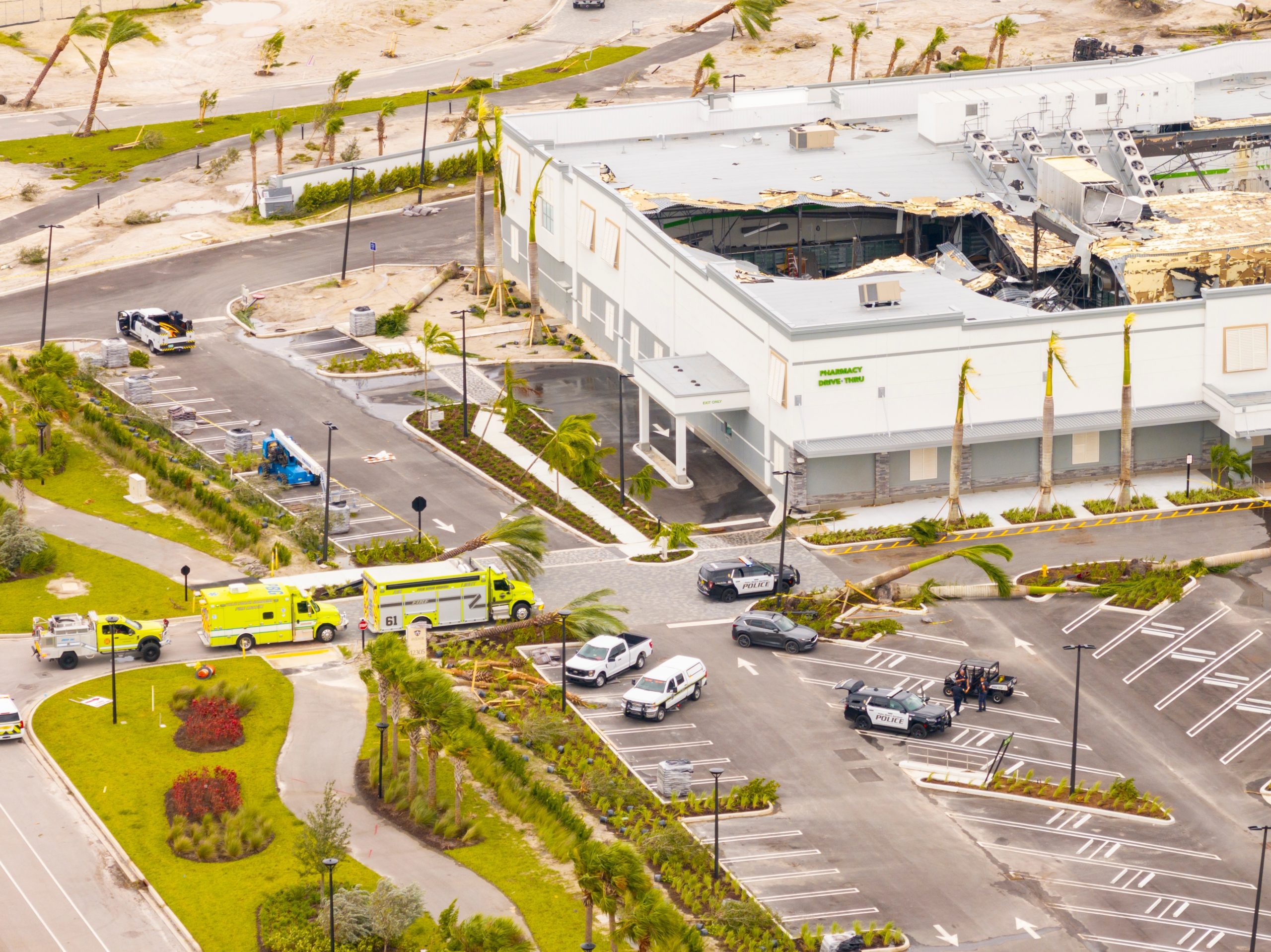
A Plan Built Before Storm Season Is the One That Actually Works
Most organizations think about storm recovery after a storm. By then, the decisions that determine how fast a brand gets back to full operations have already been made — or left unmade.
The numbers behind natural disaster recovery are stark. According to FEMA, 40% of small businesses never reopen after a natural disaster, and another 25% that do reopen fail within a year. Multi-location enterprises have more structural resilience than single-location operators, but the same underlying vulnerability applies: brands without a documented commercial storm damage restoration strategy absorb longer downtimes, higher recovery costs, and more fragmented responses when severe weather hits their markets.
Building a storm restoration strategy before the season starts is one of the highest-return investments a facilities or operations leader can make. Talk to the Stratus team to get started.
What Strategy Actually Means in This Context
Storm damage restoration at the enterprise level requires more than a list of contractors to call. A functional strategy covers three distinct phases: pre-storm preparation, active response, and structured restoration.
Pre-storm preparation means having vendor relationships established, location-level risk profiles documented, and response protocols defined before a weather event occurs. Active response covers the immediate window after a storm and includes who gets notified, who deploys, what gets assessed first, and how communications flow across the organization. Structured restoration addresses the sequencing of repairs, prioritization by location impact, and the standards that govern how brand assets are returned to their original condition.
Organizations that have mapped out all three phases recover faster and with less internal friction than those improvising their way through each stage.
Vendor Relationships Are the Foundation
The single most consequential decision in a commercial storm damage restoration strategy is who you partner with, and whether that relationship is active before you need it.
Post-storm, qualified contractors in affected markets are stretched thin quickly. A pre-established national disaster recovery partner with regional field coverage can deploy faster, triage smarter, and execute repairs with an understanding of your brand standards that a newly sourced vendor cannot replicate.
For multi-location brands, this matters at scale. A partner with a nationwide network of field partners across all 50 states brings the coordination capacity to manage simultaneous restoration across multiple affected locations — rather than handling sites sequentially as resources free up.
Prioritization: Not Every Location Recovers at the Same Rate
One of the more overlooked elements of a restoration strategy is a clear framework for location prioritization. When a severe storm affects a broad geographic area, multi-location brands often have to make difficult decisions about where recovery resources go first.
Useful prioritization criteria include revenue impact by location, the degree of structural versus cosmetic damage, whether partial operations are feasible during restoration, and each location’s role in serving customers who may have limited alternatives post-storm. Documenting that framework in advance keeps recovery decisions from becoming reactive and contested in the middle of a crisis.
Program management technology that tracks location-level status in real time makes this kind of triage considerably more manageable across a large portfolio.
Brand Continuity During the Restoration Window
Physical repair is only part of the commercial storm damage restoration picture. For brand-identified properties, what a location looks like during restoration matters.
Damaged or missing exterior signage, boarded windows, and visible structural disrepair signal to customers that a location is uncertain, even when it’s partially operational. A restoration strategy that considers what locations look like to customers throughout the repair process, not only when work is finished, protects customer perception and retention through what can be a weeks-long process.
This is where a partner with in-house manufacturing capabilities provides meaningful value. Temporary signage, replacement fabrication, and brand-standard restoration can move faster when production capacity doesn’t depend on an external supply chain.
Build the Strategy Now, Before the Season Demands It
Storm season has a way of arriving before organizations feel ready. A commercial storm damage restoration strategy that exists only in theory — or only as a mental note to “figure out when something happens” — isn’t a strategy at all.
Stratus has spent decades helping multi-location brands prepare for, respond to, and recover from severe weather events across all 50 states and 24 countries. From pre-season planning through final brand restoration, the program management infrastructure is already in place. The question is whether your organization’s strategy is, too.
Ready to build a storm restoration program your locations can count on? Connect with the Stratus team.