
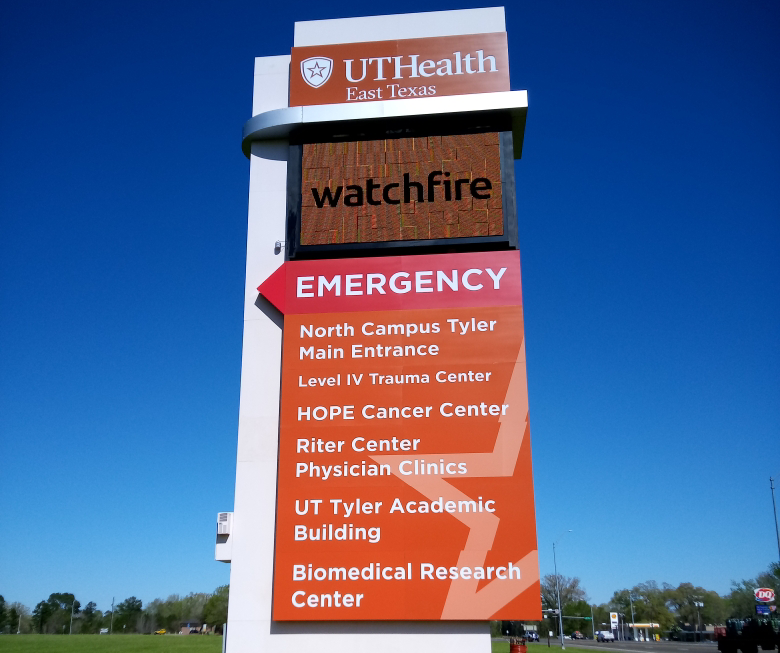
The Stakes of a Wrong Turn Inside a Hospital Are Higher Than Almost Anywhere Else
A shopper who takes a wrong turn in a mall loses a few minutes. A patient who takes a wrong turn in a hospital can miss an appointment, arrive late and unprepared for a procedure, or fail to reach the emergency department when minutes matter most.
That difference is why navigation and wayfinding deserve more attention in healthcare than in any other environment. The buildings are among the most complex people ever enter, and the people entering them are often the least equipped to navigate complexity.
Planning a navigation project across your healthcare facilities? Talk with our team about your campus.
Hospitals Change Faster Than Their Signs Can Keep Up
Few buildings reconfigure more often than hospitals. Departments shift or relocate, units convert from one specialty to another, wings close for renovation, and surge capacity opens and shuts with demand. Each change leaves a printed directory pointing somewhere that may no longer exist.
This is where healthcare digital wayfinding separates from static signage. A digital directory reflects the building as it stands today rather than the way it was aligned the day the panel was fabricated. When a department moves, the map moves with it, without a reprint cycle measured in weeks and without staff taping paper arrows over an outdated board.
For the fundamentals of hospital navigation, our post on the critical role of wayfinding in healthcare covers the ground. What follows is what changes when that navigation goes digital.
Serving Patients Who Need Language and Accessibility Support
A printed sign speaks one language, sits at one height, and offers one format. That serves a portion of the people walking through the doors, but quietly fails the rest.
Consider language alone. More than 25 million people in the U.S., about 8.6% of the population ages 5 and older, speak English less than very well, according to U.S. Census data. An interactive digital display can switch languages on request, read directions aloud, present larger text for low vision, and place controls in reach of someone using a wheelchair.
Healthcare draws the widest possible range of visitors: first-time visitors under real stress, older patients, people managing pain or anxiety, families in crisis. Healthcare digital wayfinding meets more of them where they are because it can adapt in ways a fixed panel never will.
What Healthcare Digital Wayfinding Deployment Requires
Installing digital displays in an operating hospital is not the same as installing them in a new retail build, and the differences are the whole job.
The work happens around live clinical operations that cannot pause, which means installations need to respect infection-control protocols, containment, and access restrictions that standard commercial sites never impose. Displays need power provisioning and data pathways coordinated through electrical and cabling work sequenced around patient care. And healthcare carries a heavier regulatory load than most commercial properties, so permitting specialists who understand ADA and local healthcare codes keep placement and approval on track rather than stalled.
Professional installation in this setting has to leave the surrounding environment clean, safe, and undisturbed, and on a schedule built around the facility rather than the crew.
When a Dark Directory Has Clinical Consequences
In a store, a display that fails is a lost sales opportunity. In a hospital, a directory that goes dark sends stressed patients back to a service desk during hours when no one may be staffing it.
That raises the bar on reliability. Remote monitoring flags a failing unit before a visitor encounters it. At Stratus, our nationwide field partner network paired with on-call service puts a qualified technician on site without having to source a local vendor during mid-crisis. In an environment that runs around the clock, the navigation system has to run with it.
Navigation That Keeps Pace With Care
Stratus has spent decades helping healthcare organizations implement and maintain their presence across complex campuses, and digital signage deployments draw on all of it. Permitting, electrical, installation, and ongoing service run through one program built for the realities of a working hospital.
Ready to plan healthcare digital wayfinding across your facilities? Start the conversation with our team.