
Key Takeaways
Retail disaster recovery logistics cover far more than physical repairs; they include how quickly locations reopen, how the brand appears to customers during restoration, and whether recovery resources reach the right stores first. Multi-location retail brands that document their logistics before storm season reopen faster, lose less revenue, and protect customer relationships that competitors may be too slow to reclaim.
Retailers That Bounce Back Quickest are the Prepared Ones
When a hurricane or severe storm cuts through a retail market, the physical damage gets the attention. Broken windows, compromised roofs, downed signage, and flooded sales floors are visible and urgent. But the recovery challenge for multi-location retail brands extends well beyond the immediate repairs; it lives in the logistics.
How fast can you get crews to affected locations? Which stores get resources first? What does your brand look like to customers during the weeks it takes to fully restore a site? These questions don’t have good answers unless someone has worked them out in advance.
Weather-related disasters cost the U.S. economy more than $180 billion in 2024 alone, and retail brands absorb a disproportionate share of that exposure through storefront damage, forced closures, and supply chain disruption. The retailers that minimize those losses have one thing in common: their retail disaster recovery logistics were mapped out before storm season arrived.
Don’t wait for a storm to expose gaps in your recovery plan. Connect with the Stratus team today.
The Logistics Gap Most Retailers Don’t See Coming
Multi-location retailers typically have some form of emergency plan on file. What most lack is a logistics layer that makes the plan executable at scale when multiple locations are affected simultaneously.
Executing retail disaster recovery logistics across a large portfolio requires pre-established answers to questions that feel theoretical until they aren’t: Which vendor handles exterior repairs at your Southeast locations? Who fabricates replacement signage when storm damage takes out your storefront identification? How are repair crews prioritized when five locations in the same market need attention at the same time?
Without documented answers, those decisions get made reactively under pressure, which is the most expensive and least efficient way to make them.
Reopening Speed Is a Competitive Advantage
In the aftermath of a major storm, customers in affected markets are actively looking for open locations. They need supplies, routine purchases, and the normalcy that a functioning retail environment provides. The retailers that reopen first capture that demand. Those that stay dark lose it, often permanently, as shopping patterns shift to wherever customers found alternatives.
As NOAA documented following Hurricanes Helene and Milton in 2024, retailers that reopened quickly became anchor points for community recovery, reinforcing brand loyalty precisely when it mattered most. The ability to move fast after a storm is a direct function of how thoroughly the recovery logistics were built out beforehand.
A national recovery partner with pre-positioned field teams and an established presence in your markets can compress the timeline between storm passage and store reopening considerably because the vendor selection, credentialing, and deployment protocols already exist.
Prioritizing Locations When Resources Are Finite
One of the harder logistics problems for multi-location retailers is triage. When storm damage is widespread, recovery resources are finite. Every day spent on a lower-priority location is a day a higher-revenue or higher-visibility store stays closed.
A functional prioritization framework takes into account revenue per location, whether partial operations are feasible during restoration, the degree of brand visibility at each site, and proximity to customers who may have limited alternatives in the affected area. Retailers that have built this framework into their recovery plan make faster, better decisions under pressure.
Program management technology that provides real-time location status across a portfolio makes that triage considerably more manageable. This gives operations teams a live view of where things stand rather than piecing together status from scattered field reports.
What Your Brand Looks Like During Restoration Matters
The physical recovery of a retail location happens in stages. For weeks after a significant storm, affected stores may be operating behind boarded windows, missing exterior signage, or working around visible structural repairs. That intermediate state is what customers see, and it shapes their perception of whether the brand is back or still in trouble.
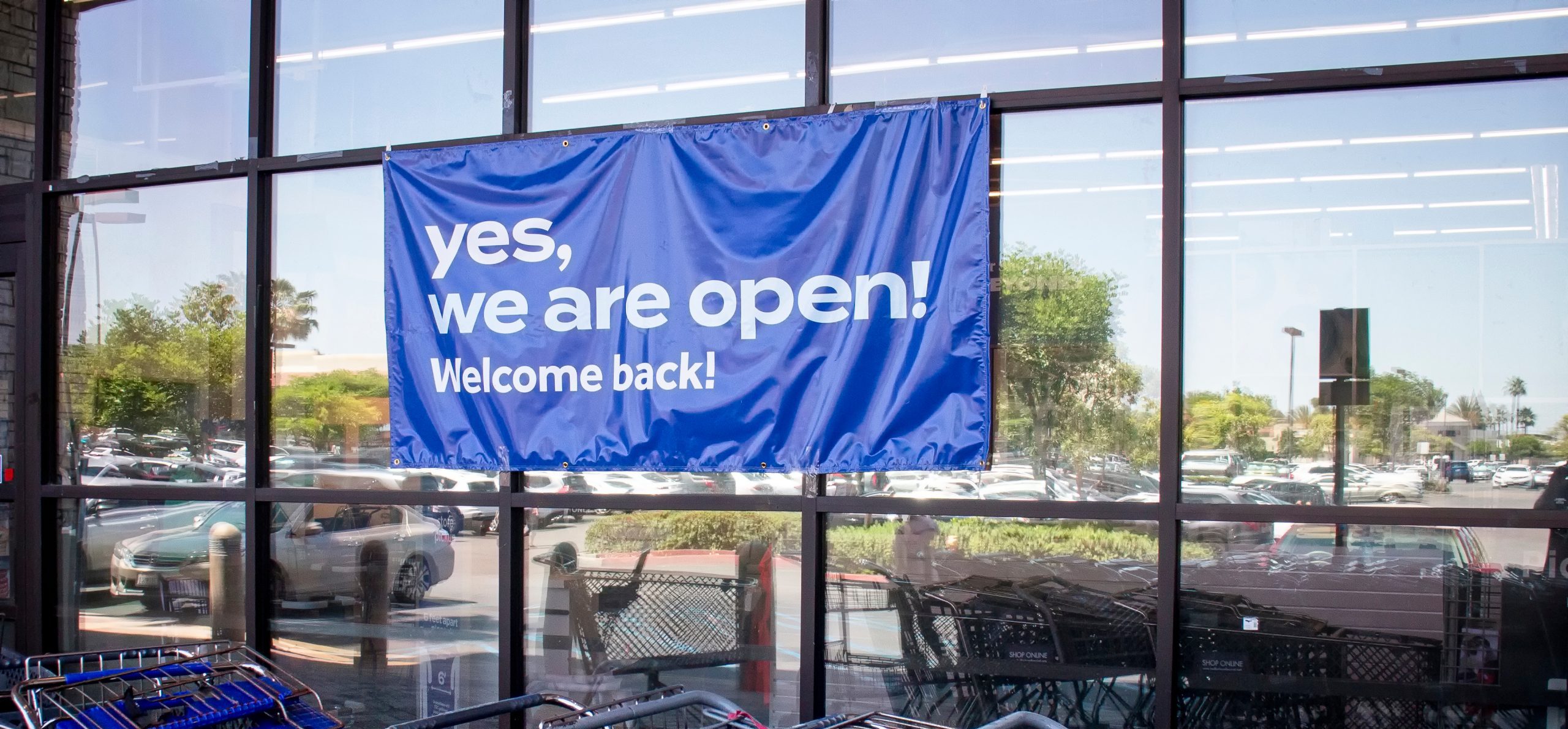
A retail recovery logistics plan that accounts for brand presentation during the restoration window, not just at completion, protects something harder to rebuild than a storefront: customer confidence. Temporary signage, properly maintained entry points, and clear communication that a location is open and operational all contribute to that perception.
A partner with in-house manufacturing capabilities can produce interim and replacement signage faster than one dependent on outside fabrication. It’s a meaningful difference when brand-identified storefronts are sitting dark while production queues clear elsewhere.
Faster Recovery Starts With a Logistics Plan Built Today
Storm season follows the same approximate calendar every year. The logistics that determine how fast a retail brand gets back on its feet are either in place before a storm or assembled in its aftermath. The difference in outcome between those two scenarios is significant.
Stratus works with multi-location retail brands to build the recovery infrastructure that makes speed possible: a nationwide field partner network across all 50 states, in-house signage manufacturing, program management technology, and decades of experience executing recovery programs at scale. When the season arrives, the logistics are ready.
Ready to build a retail recovery program that holds up when it’s tested? Connect with the Stratus team.