
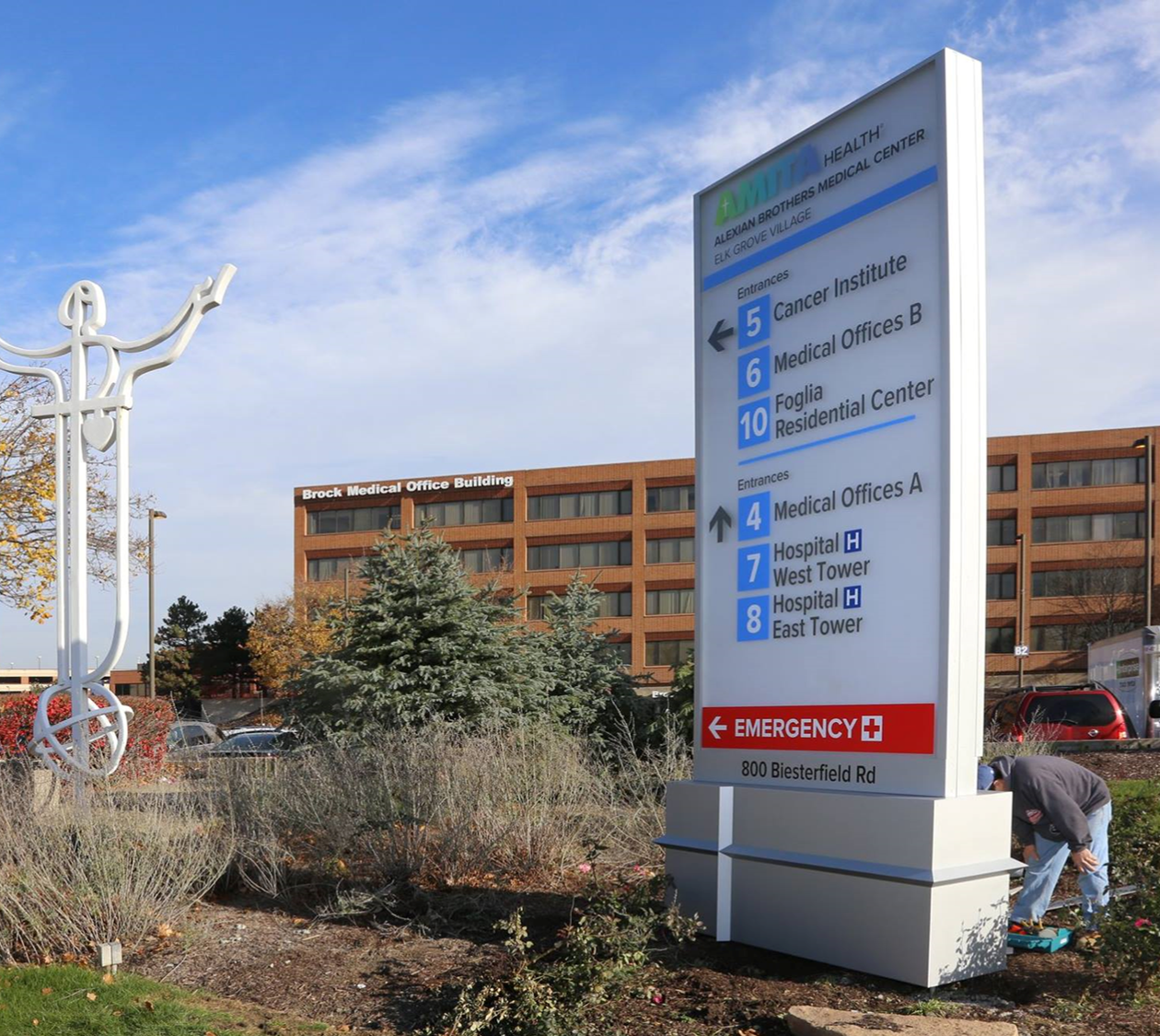
Strategic Implementation for Healthcare Facility Exterior Signage
Hospital exterior signage serves as far more than directional guidance — it’s a critical component of patient care that directly impacts emergency response times, visitor stress levels, and overall trust in your healthcare institution. When patients and families arrive during medical emergencies or scheduled appointments, clear, professional signage can mean the difference between confusion and confidence during already stressful situations.
At Stratus, we’ve helped healthcare organizations nationwide implement comprehensive signage strategies that strengthen patient connections while addressing the unique regulatory and operational challenges of medical facilities. Our experience shows that successful hospital exterior signage requires specialized expertise that goes far beyond standard commercial signage approaches.
Ready to Enhance Your Hospital’s Patient Experience? Connect with our team today to develop comprehensive exterior signage solutions that guide patients safely while strengthening your healthcare brand.
5 Essential Steps to Implement Exterior Signage at Hospitals
1. Conduct Comprehensive Site Assessment and Regulatory Analysis
Begin with a thorough evaluation of your facility’s specific signage needs, focusing on patient flow patterns, emergency access requirements, and existing wayfinding challenges. Hospital environments demand a specialized assessment that considers ambulance routes, visitor parking patterns, and multiple building entrances that serve different medical specialties.
Healthcare facilities operate under stricter regulatory frameworks than typical commercial properties. ADA compliance requirements, local healthcare zoning codes, and emergency access regulations all influence signage placement, sizing, and illumination requirements. Document existing permit histories and identify any variance requirements early in the planning process.
2. Develop Strategic Wayfinding Systems
Effective wayfinding signage reduces patient stress and improves operational efficiency by eliminating confusion before visitors even enter your facility. Design exterior signage hierarchies that guide patients from parking areas through main entrances, emergency departments, and specialty care centers with clear, intuitive messaging.
Consider the emotional state of your signage users — patients and families often arrive feeling anxious or overwhelmed. Use clear typography, high contrast colors, and logical information sequencing that can be quickly understood even during stressful situations. Incorporate multilingual considerations if your patient population requires broader accessibility.
3. Navigate Complex Permitting and Compliance Requirements
Hospital signage projects often involve multiple regulatory bodies, from municipal planning departments to healthcare facility licensing boards. Experienced permitting specialists understand these overlapping requirements and can navigate approval processes efficiently while ensuring full compliance.
Work with partners who maintain established relationships with local authorities and understand common healthcare facility approval challenges. This expertise prevents costly delays and ensures your signage meets all regulatory requirements from initial installation through ongoing maintenance.
4. Plan Phased Installation for Operational Continuity
Healthcare facilities cannot afford operational disruptions during signage installation; their services are too vital to the communities they serve to be shuttered for any length of time. Develop implementation strategies that maintain patient access, emergency response capabilities, and daily operations throughout the project timeline. This often requires coordinating installations during off-peak hours and implementing temporary wayfinding solutions during construction phases.
Consider seasonal patient volume fluctuations and scheduled facility maintenance when planning installation timelines. Professional project management ensures coordination between signage installation, existing facility operations, and patient care requirements.
5. Establish Long-Term Support Systems
Hospital exterior signage faces unique environmental challenges from weather exposure, high traffic volumes, and 24/7 operational demands. Develop comprehensive maintenance programs that ensure consistent visibility and functionality through preventive care and emergency response capabilities.
Plan for rapid response to signage failures that could impact patient safety or emergency access. At Stratus, our 24/7/365 maintenance support ensures your wayfinding systems remain operational when patients need them most, while proactive maintenance prevents minor issues from becoming major problems.
Build Exceptional Patient Experiences Through Expert Healthcare Signage
Successfully implementing exterior signage at hospitals requires more than standard commercial signage expertise—it demands partners who understand the critical role signage plays in healthcare delivery. From regulatory compliance and patient safety to operational continuity and brand trust, every element must work together to create environments that support healing and care.
At Stratus, we combine several decades of healthcare signage experience with comprehensive capabilities that include exterior signage solutions, strategic permitting, nationwide installation networks, and ongoing maintenance support. Our integrated approach ensures consistent quality while addressing the unique challenges of healthcare facility implementation.
Ready to transform your hospital’s exterior signage strategy? Contact our team today.