
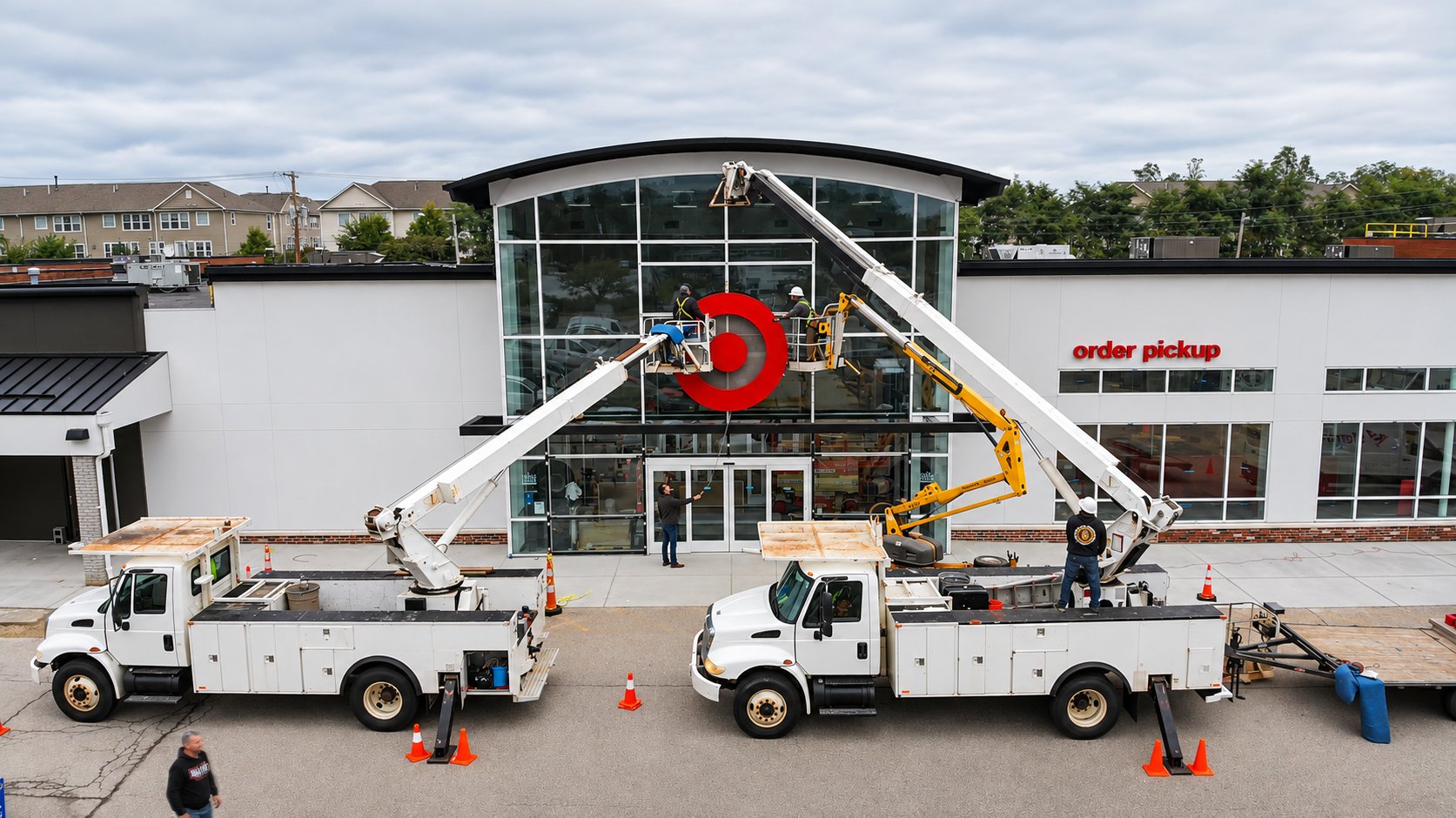
Where Multi-Location Rollouts Are Won or Lost
The first 20 locations look exactly like the renderings. Leadership is thrilled. Then the reports start coming in. One site received vinyl cut for a different storefront width. Three municipalities are still sitting on permit applications. A store manager learns the install crew is arriving when they knock on the door at 6 a.m.
None of these problems started in the field. They started weeks or months earlier, at decision points that looked minor when they were made. Brand rollout management is the discipline of getting those decisions right before they multiply across hundreds of locations.
Planning a rollout across your footprint? Talk with the Stratus team about where your program stands today.
Rollouts Are Decided Before Anything Ships
Successful rollouts begin with verified data for every site: measured facades, existing electrical, landlord requirements, and local sign code. That information drives fabrication, so each package fits the location it’s headed to.
Struggling rollouts assume every site matches the prototype. The gaps surface later as additional measurements, re-fabrication, and second trips, each one billed and each one pushing the schedule. Our guide to managing a signage rollout without chaos covers the survey phase for signage programs in more detail.
Permitting and Owner Decisions Set the Real Schedule
On a rollout, the calendar is dictated by the slowest approval. In a recent survey of 400 U.S. construction professionals, 31% named client-side holdups and 29% named permitting as major causes of project delays.
Both are manageable. Strong programs map permit lead times by jurisdiction and sequence installs around them, so crews arrive at sites that are ready. They also settle design approvals early and set a clear process for anything that changes midstream. Weak programs schedule crews first and hope approvals catch up, which leads to idle labor, rescheduling fees, and frustrated store teams. A dedicated permitting function keeps that work moving in parallel with fabrication rather than behind it.
Materials Arrive Ready, or They Arrive as a Puzzle
When materials ship in bulk to a regional drop point, someone in the field has to sort them, and something always ends up missing. Successful programs kit materials by site, label them clearly, and time each delivery to its install date. They also track what ships against what gets installed, so surplus inventory, damaged pieces, and replacement parts don’t disappear into a store’s back room. Warehousing and logistics rarely get much attention in a rollout plan, yet it’s where a lot of schedule risk hides.
Field Quality Has to Look the Same Everywhere
A rollout might involve dozens of crews across multiple states. Without one standard and one way of verifying the work, quality drifts from region to region. The programs that hold up use photo documentation, consistent punch lists, and sign-off criteria that apply to every location, from the flagship to the smallest rural site. A vetted field partner network working from the same playbook makes that consistency possible. When a crew finds a condition that doesn’t match the survey, strong programs have a fast path to a decision, so one surprise doesn’t stall a site for a week.
Closeout Decides What You Actually Own
Plenty of rollouts look finished on the schedule and stay unfinished for months. Punch items linger, and nobody has a reliable record of what was installed where. Successful programs close each site completely: punch items resolved, as-built records captured, warranty details documented, and assets handed off to an ongoing brand maintenance plan. That handoff protects the investment long after the last crew leaves.
What Successful Brand Rollout Management Has in Common
Look across rollouts that finish clean, and a pattern shows up. There’s one accountable owner for the whole program. There’s one source of truth for site data, schedules, and status. And there’s a partner who treats planning, permitting, logistics, installation, and closeout as one connected process. Strong brand rollout management also plans for exceptions, because some locations will always differ from the prototype.
That’s how Stratus approaches refresh and rollout programs. Our program management teams and project tracking technology give brands visibility into every location from survey to closeout, so problems surface while they’re still small.
Start Your Next Rollout on Solid Ground
Whether you’re planning a rebrand, a refresh, or a new prototype rollout, the decisions you make in the first few weeks will show up at every location. Connect with Stratus to build a rollout plan that holds from the first site to the last.