
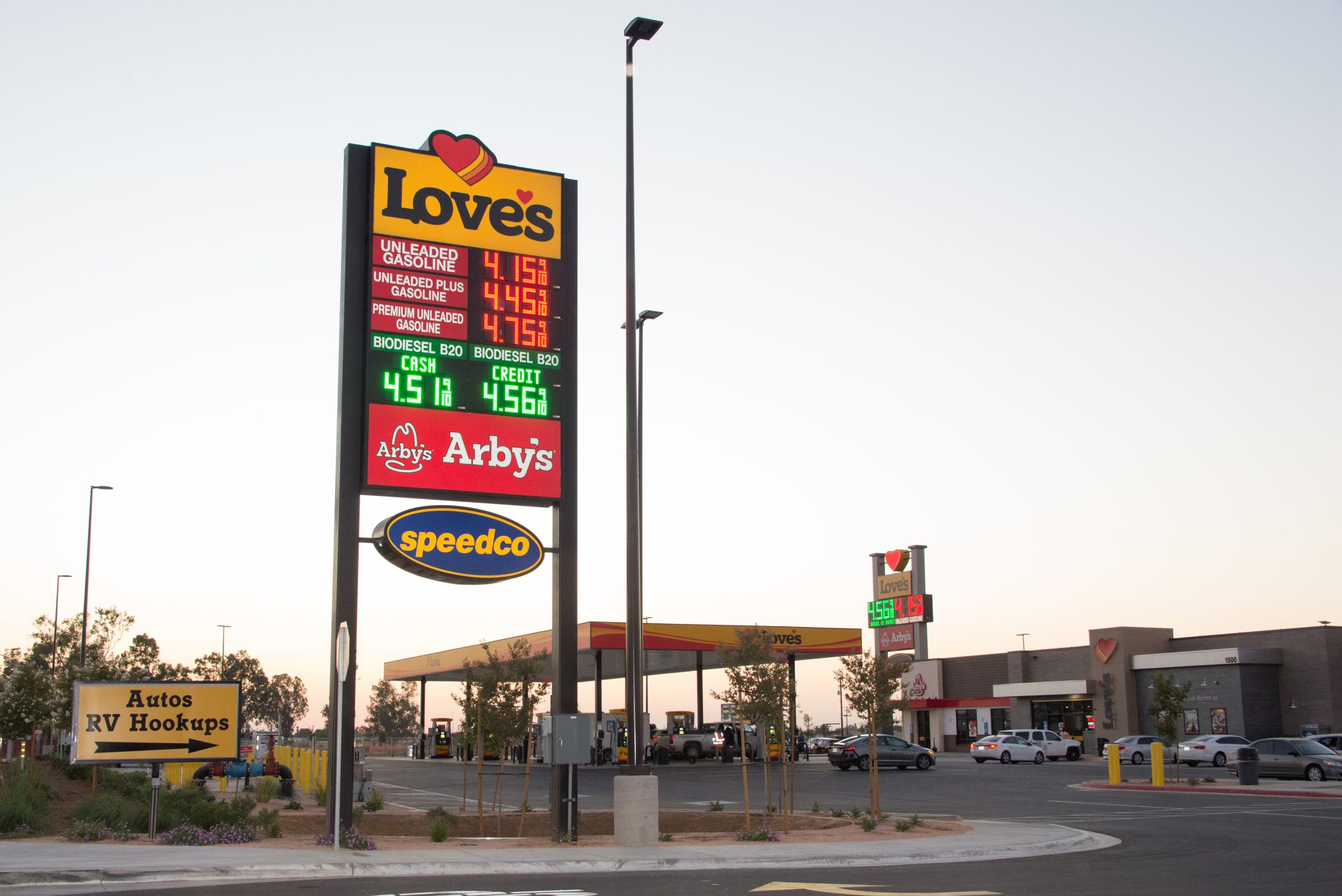
Master the Complexity of Multi-Site C-Store Rebrand Signage Permits
When a regional c-store chain rebrands 50 locations, they’re not managing one compliance process — they’re managing 50 simultaneous permitting journeys, each with different requirements, timelines, and potential roadblocks. What works perfectly in one jurisdiction might be prohibited in another. A permit that takes 30 days in City A could require 120 days in City B. And while your team waits for c-store signage compliance approvals, competitors gain ground and customers see outdated branding that no longer represents your business.
For multi-location c-store operators, particularly those managing fuel brand conversions or complete portfolio rebrands, signage compliance represents one of the most complex — and most critical — elements of successful implementation. The challenge isn’t just understanding regulations; it’s orchestrating compliance across dozens or hundreds of locations simultaneously while maintaining brand consistency and meeting aggressive launch schedules.
Ready to Simplify Your Multi-Location Rebrand? Connect with our team today to leverage our nationwide permitting expertise and program management capabilities.
Why Multi-Location C-Store Signage Compliance Is Uniquely Challenging
Unlike single-site projects where you master one jurisdiction’s requirements, multi-location rebrands demand expertise across potentially dozens of different municipal codes. Sign ordinances vary dramatically even between neighboring communities. One city might allow 200-square-foot canopy signs while the adjacent town caps them at 120 square feet. Digital fuel pricing displays permitted in one jurisdiction face outright bans in another.
These variations can fundamentally challenge brand consistency. Your marketing team designs unified signage that represents your new brand identity, but permit realities may force compromises that dilute that vision. The key is knowing which battles to fight (variance requests for flagship locations) versus which adaptations to accept (minor dimensional adjustments that don’t impact brand recognition).
Timeline Chaos Threatens Coordinated Launches
Permit approval timelines create additional complexity for c-store rebrand signage permits. According to industry data, permit processing times vary from as little as two weeks in streamlined jurisdictions to four months or more in areas with complex design review processes. For brands planning coordinated “reveal day” launches across markets, these timeline discrepancies demand sophisticated project management.
The cascading effects amplify costs quickly. Manufacturing can’t begin until permits are approved. Installation scheduling depends on manufacturing completion. Marketing campaigns are tied to launch dates. When one location’s permit drags, it threatens the entire rollout schedule and forces difficult decisions about whether to proceed with partial launches or delay everything.
C-Store-Specific Compliance Factors Increase Complexity
Convenience store and gas station signage faces unique regulatory challenges beyond typical retail compliance. These industry-specific factors multiply the complexity of multi-location rebrands:
Canopy Signage Structural Requirements — Fuel canopies represent significant structural elements requiring engineering certifications. Building codes mandate specific wind load calculations, seismic considerations, and attachment methods. Large-format canopy signs must demonstrate structural adequacy through professional engineering stamps — adding both time and cost to the permitting process.
Fuel Pricing Display Regulations — Federal and state regulations govern fuel pricing displays with surprising specificity. The Federal Trade Commission’s Fuel Rating Rule establishes requirements for octane posting, while individual states add their own mandates about pricing visibility, size, and illumination. For multi-location operators, these regulations create a patchwork of compliance requirements. Our digital signage solutions are designed with this regulatory complexity in mind, providing the adaptability c-store rebrands demand.
24/7 Illumination and Visibility Standards — Unlike retail stores that close at night, c-stores operate around the clock — and their signage must too. This creates unique compliance considerations around illumination levels, light pollution ordinances, and energy codes. The compliance challenge extends to backup power requirements. Some jurisdictions mandate emergency power for essential signage, ensuring 24/7 visibility even during outages. Our energy solutions team specializes in designing illumination systems that meet round-the-clock operational needs while satisfying increasingly strict energy efficiency standards.
The Systematic Approach to Multi-Site C-Store Signage Compliance Success
Early Jurisdiction Mapping Prevents Downstream Crises
Successful multi-location c-store signage compliance begins months before permit applications, with comprehensive jurisdiction mapping across your entire portfolio. Our permitting team’s nationwide experience across all 50 states enables rapid requirement assessment. We maintain relationships with municipal authorities and understand which jurisdictions offer expedited review processes, which require pre-application meetings, and which commonly request specific documentation that can be prepared in advance.
This early mapping creates the foundation for realistic timeline development. Rather than assuming uniform 60-day permit cycles across all locations, you build schedules that account for actual jurisdictional variations — preventing surprises that derail launch dates.
Prototype Testing in Restrictive Markets Validates Design
Before committing to full portfolio manufacturing, test your signage designs in your most restrictive markets first. This approach identifies compliance issues early when design modifications are still relatively simple and inexpensive. If your prototype succeeds in the jurisdiction with the strictest dimensional limits, tightest illumination standards, and most rigorous structural requirements, you can be confident it will work elsewhere.
This testing phase also reveals opportunities for strategic variance requests. Some design elements might be worth fighting for in flagship locations while accepting modifications in secondary markets. Our program management approach helps you make these strategic decisions based on brand impact versus implementation complexity.
Simultaneous Submission Strategies Accelerate Timelines
Rather than sequential permit applications, successful multi-location rebrands employ simultaneous submission strategies. This approach requires significant upfront coordination but dramatically compresses overall timelines. The key is having all documentation, engineering calculations, and design specifications prepared for every jurisdiction before beginning any applications.
Our comprehensive project management technology tracks permit status across hundreds of locations simultaneously, providing real-time visibility into which applications are progressing smoothly versus which need attention. This centralized tracking enables proactive problem-solving rather than reactive crisis management.
Why Single-Source Partners Matter for Multi-Location C-Store Rebrand Signage Permits
Multi-location c-store signage compliance demands seamless coordination across permitting, design, manufacturing, and installation. Single-source partnerships eliminate the coordination nightmares that plague multi-vendor projects.
When permit authorities request design modifications, multiple vendors create a coordination cascade — designers communicate with engineers, who coordinate with manufacturers, who update installers. Each handoff introduces delays and miscommunication. With a single-source partner like Stratus, our in-house manufacturing capabilities mean design changes translate directly to production adjustments without vendor coordination delays.
Multi-location rebrands inevitably surface unexpected compliance challenges, like suddenly enforced ordinances, conflicting code interpretations, or field condition surprises. Single-source providers pivot quickly because all functions operate under unified management. Our nationwide field partner network of 4,000+ certified installers ensures rapid response regardless of location.
Most importantly, single-source partnerships create clear accountability through one point of contact, which is crucial during the intense final weeks before launch. At Stratus, we’ve managed c-store and petroleum retail rebrands across hundreds of locations, navigating the full spectrum of compliance challenges. Our integrated approach ensures your rebrand succeeds on schedule and on brand — no matter how many locations you’re transforming.
Launch Your Rebrand with Confidence
Multi-location c-store signage compliance doesn’t have to be the roadblock that delays your rebrand and inflates costs. With the right implementation partner, you can navigate permitting complexity while maintaining brand consistency and meeting aggressive timelines.
The key is starting early, understanding the multiplier effect of jurisdictional variations, and working with partners who have proven experience managing compliance across diverse markets simultaneously. Whether you’re converting fuel brands across 50 stations or rebranding an entire c-store portfolio, the same principles apply: map requirements early, test designs in restrictive markets first, employ simultaneous submission strategies, and maintain flexibility for inevitable adjustments.
Ready to transform your c-store portfolio with confidence? Contact our team today to discuss how our approach to multi-location c-store signage compliance can keep your rebrand on schedule.